Your HVAC system works hard year-round—without regular maintenance, performance drops, energy costs rise, and unexpected breakdowns become more likely. At Wolf Air, our maintenance plans are designed to keep your system running at peak performance while giving you peace of mind no matter the season.
Key advantages:
Your HVAC system works hard year-round—without regular maintenance, performance drops, energy costs rise, and unexpected breakdowns become more likely. At Wolf Air, our maintenance plans are designed to keep your system running at peak performance while giving you peace of mind no matter the season.
Key advantages:
Our maintenance plans are built around seasonal service to ensure your system is ready before peak demand.
A single Preventive AC maintenance visit that helps your system run efficiently, avoid breakdowns, and stay ready for peak summer temperatures.
What’s included:
Keep your system ready for every season with an annual maintenance plan that includes one spring visit and one fall visit.
What’s included:
Cooling
Heating
Check Thermostat
& Filters
Test Temperature Split
Check System
Pressures
Check
Refrigerant Levels
Perform Amp Draw
Check Evaporator Coils
Clean / Tighten
Electrical Connections
Test Capacitors and Operation
Test Safety and Limit Switches
Rinse Condenser Coils
Check Contactor and Condensate Lines
Inspect Pilot System
Clean Burners
Our maintenance plans are built around seasonal service to ensure your system is ready before peak demand.
A single Preventive AC maintenance visit that helps your system run efficiently, avoid breakdowns, and stay ready for peak summer temperatures.
What’s included:
Keep your system ready for every season with an annual maintenance plan that includes one spring visit and one fall visit.
What’s included:
Cooling
Heating
Check Thermostat & Filters
Test Temperature Split
Check System Pressures
Check Refrigerant Levels
Perform Amp Draw
Check Evaporator Coils
Clean / Tighten Electrical Connections
Test Capacitors and Operation
Test Safety and Limit Switches
Rinse Condenser Coils
Check Contactor/Condensate Lines
Inspect Pilot System
Clean Burners
Most HVAC systems should be professionally serviced twice a year—once in the spring for your air conditioner and once in the fall for your heating system. Regular tune-ups help catch small issues early, improve efficiency, and extend the life of your equipment.
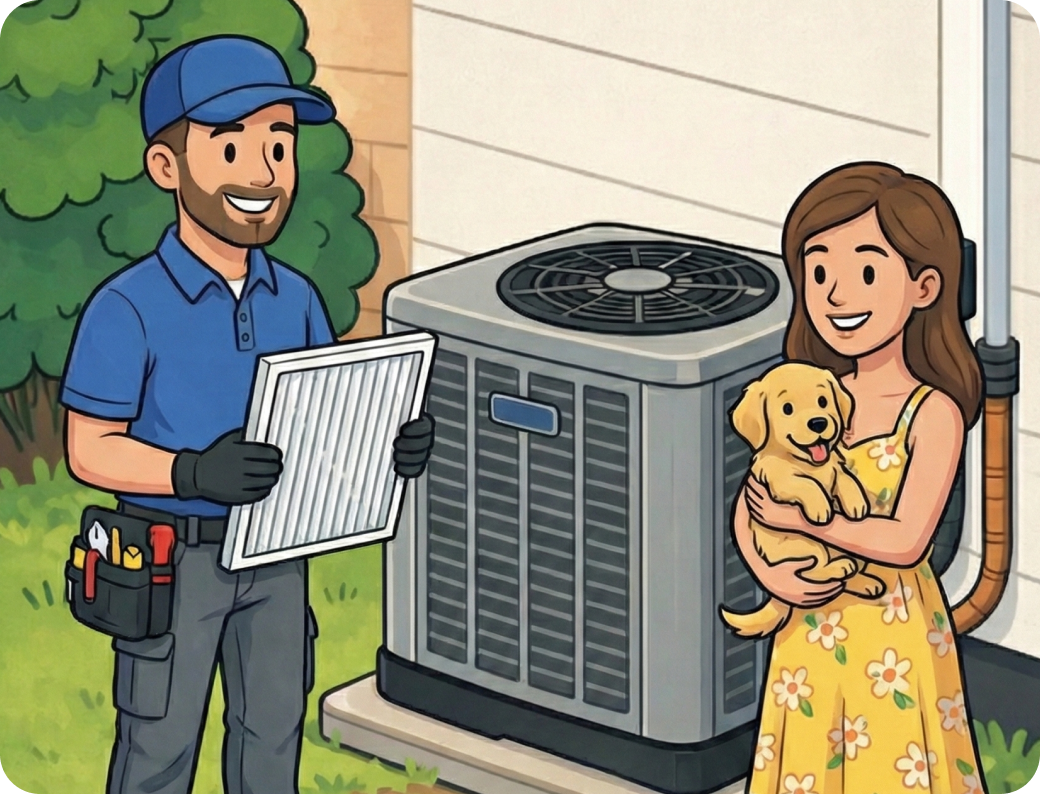
A typical maintenance visit includes inspecting key components, cleaning parts, checking system performance, testing safety controls, tightening electrical connections, and replacing or checking filters if needed. The goal is to keep your system running safely, efficiently, and reliably.
Yes. Routine maintenance helps reduce the risk of unexpected breakdowns, lowers energy use, improves indoor comfort, and can help your system last longer. Skipping maintenance often leads to higher repair costs over time.
In many cases, yes. A clean, properly tuned HVAC system does not have to work as hard to heat or cool your home, which can improve energy efficiency and help reduce monthly utility costs.
Most maintenance visits take about 60 to 90 minutes, depending on the type of system, its condition, and whether one or multiple units are being serviced.
Common signs include uneven temperatures, weak airflow, unusual noises, strange odors, rising energy bills, short cycling, or a system that struggles to keep up. Even if you do not notice symptoms, routine service is still recommended.
Maintenance cannot prevent every issue, but it can significantly reduce the chance of major problems by identifying wear, damage, or performance issues before they turn into costly repairs.
Most filters should be checked monthly and replaced every 1 to 3 months, depending on the filter type, pets, indoor air quality needs, and how often your system runs.
Yes. Even newer systems need regular service to maintain performance, efficiency, and reliability. Routine maintenance also helps ensure that small issues are addressed before they affect the system.
Without regular service, your system may lose efficiency, experience more frequent breakdowns, wear out faster, and provide less consistent comfort. Neglected systems can also develop safety or air quality concerns over time.
Absolutely. Maintenance is especially important for older systems because it helps improve performance, reduce strain on aging components, and identify whether repair or replacement is the smarter long-term option.
The best times are spring for cooling systems and fall for heating systems, before peak demand seasons begin. Scheduling early helps ensure your system is ready when you need it most.